What is a Handwriting PDF?

Handwriting PDFs are digital documents containing scanned or digitally created handwritten content, differing from typed PDFs in their origin and format.
Unlike standard PDFs generated from typed text, these files represent the unique styles and variations inherent in individual handwriting.
Defining Handwriting PDFs
Handwriting PDFs represent a unique category of digital documents, fundamentally distinguished by their source: human handwriting. These aren’t created through direct typing or digital text generation, but rather originate from scanned handwritten notes, forms, or historical documents. Essentially, a Handwriting PDF is a digital image or representation of physical handwriting, preserved in the Portable Document Format.
This format captures the nuances of individual penmanship – the variations in letter formation, pressure, and style – making each document inherently unique. They can contain anything from simple notes to complex historical records, all rendered as images of handwriting. The key characteristic is the presence of handwritten text as the primary content, setting them apart from standard, digitally-created PDFs.
Distinction Between Handwriting and Typed PDFs
The core difference between Handwriting PDFs and typed PDFs lies in their creation and underlying data. Typed PDFs are built from digitally created text, meaning the content is encoded as characters that can be easily searched, selected, and edited. Conversely, Handwriting PDFs initially exist as images of handwriting; the text isn’t directly selectable or searchable without further processing.
While a typed PDF prioritizes digital text manipulation, a Handwriting PDF preserves the visual representation of handwriting. This distinction impacts functionality – typed PDFs are easily indexed, while Handwriting PDFs require Optical Character Recognition (OCR) to convert the image into machine-readable text. Handwriting emphasizes legibility and style, while typed text focuses on clarity and digital accessibility.

The Technology Behind Handwriting PDF Conversion
Handwriting PDF conversion relies on technologies like Optical Character Recognition (OCR) and advanced Deep Learning models to interpret and digitize handwritten content effectively.
Optical Character Recognition (OCR) for Handwriting
Optical Character Recognition (OCR) is fundamental to converting Handwriting PDFs into editable and searchable text. Traditional OCR excels with typed fonts, but handwriting presents unique challenges due to variations in style, slant, and character connections.
Advanced OCR engines employ algorithms specifically trained on vast datasets of handwritten samples. These algorithms analyze shapes, patterns, and contextual clues to decipher individual characters. The process involves image preprocessing to enhance clarity, followed by feature extraction and character classification.
However, even sophisticated OCR isn’t foolproof. Illegible handwriting or poor scan quality can significantly reduce accuracy. Modern systems often integrate with machine learning to improve recognition rates over time, learning from corrections and user feedback to refine their models.
Deep Learning Models in Handwriting Recognition
Deep Learning Models have revolutionized Handwriting Recognition, surpassing traditional OCR methods in accuracy and adaptability. Convolutional Neural Networks (CNNs) excel at feature extraction from image data, identifying patterns within handwritten characters regardless of variations in style.
Recurrent Neural Networks (RNNs), particularly Long Short-Term Memory (LSTM) networks, are crucial for processing sequential data like cursive handwriting, understanding the context of connected letters. These models learn to predict the next character based on the preceding sequence.
Furthermore, hybrid architectures combining CNNs and RNNs offer enhanced performance. These models leverage the strengths of both approaches, achieving state-of-the-art results in recognizing complex handwriting styles and improving the conversion of Handwriting PDFs.
Continuous Offline Handwriting Recognition
Continuous Offline Handwriting Recognition (COHR) focuses on transcribing entire handwritten lines or pages without segmentation into individual characters. This contrasts with older methods requiring isolated character recognition, making COHR more efficient for processing Handwriting PDFs.
Deep Learning models, specifically RNNs and CNNs, are central to COHR. They analyze the entire stroke sequence, capturing contextual information crucial for accurate transcription. The paper “Continuous Offline Handwriting Recognition using Deep Learning Models” by Jorge Sueiras demonstrates advancements in this field.

COHR addresses challenges like varying writing speeds, overlapping strokes, and stylistic differences, offering a robust solution for digitizing handwritten documents and converting Handwriting PDFs into searchable, editable text.

Challenges in Converting Handwriting PDFs
Converting Handwriting PDFs presents hurdles due to illegibility, diverse handwriting styles—cursive versus print—and the complexities of deciphering historical document handwriting.
Illegible vs. Unreadable Handwriting
Distinguishing between illegible and unreadable handwriting is crucial for effective PDF conversion. Illegible handwriting refers to script that is difficult or impossible to decipher due to its formation – the letters themselves are poorly shaped or connected. Conversely, unreadable implies the handwriting is formed correctly, but the document’s quality (fading, damage, poor scan) prevents clear interpretation.
For conversion software, illegibility poses a significant challenge as the Optical Character Recognition (OCR) struggles to identify characters. Unreadability, while not a fault of the writing itself, similarly hinders accurate conversion, requiring image enhancement techniques before OCR can be applied. Both scenarios demand advanced algorithms and potentially manual correction to achieve reliable text extraction from handwriting PDFs.
Variations in Handwriting Styles (Cursive vs. Print)
Handwriting PDF conversion faces complexities due to diverse handwriting styles, primarily cursive and print (or block letters). Cursive, characterized by connected letters, presents a unique challenge as OCR systems must recognize ligatures and flowing letterforms. Print, with its distinct, unconnected characters, often proves easier for initial recognition, but variations in letter size and spacing still pose hurdles.
Advanced software employs specialized cursive readers trained on vast datasets of connected handwriting. However, mixed styles – a blend of cursive and print within the same document – significantly increase conversion difficulty. Successfully handling these variations requires sophisticated algorithms capable of dynamically adapting to the prevailing handwriting style within a handwriting PDF.
Historical Document Handwriting Recognition
Handwriting PDF conversion of historical documents presents unique challenges beyond modern handwriting. Paleography, the study of ancient writing, becomes crucial as letterforms and scripts evolve significantly over time. Degradation of paper, ink fading, and archaic language further complicate the process. Traditional OCR systems, trained on contemporary handwriting, often fail to accurately interpret these older styles.
Recent advancements leverage Multimodal Large Language Models (LLMs) specifically for historical document recognition. These models combine visual analysis with contextual understanding, improving accuracy. Extracting information from these handwriting PDFs requires specialized tools and expertise, aiming to preserve and digitize invaluable historical records for research and accessibility.

Tools and Software for Handwriting PDF Conversion
Advanced Handwriting OCR software and specialized cursive readers are essential for converting handwriting PDFs to editable formats like Word or Excel, utilizing AI tools;
Advanced Handwriting OCR Software
Advanced Handwriting OCR (Optical Character Recognition) software represents a significant leap in digitizing handwritten documents. These tools go beyond traditional OCR, which struggles with the nuances of cursive and varying handwriting styles. Modern software leverages sophisticated algorithms, including deep learning models, to accurately interpret handwritten text within handwriting PDFs.
Key features include the ability to handle diverse handwriting styles – from neat print to elaborate cursive – and to correct for distortions introduced during scanning. Some programs offer specialized cursive readers, enhancing recognition rates. Furthermore, these solutions often incorporate features for extracting data from handwritten forms and converting PDFs directly into editable formats like Word or Excel, preserving formatting as much as possible. The accuracy and efficiency of these tools are continually improving, driven by advancements in AI and machine learning.
Cursive Readers and their Capabilities
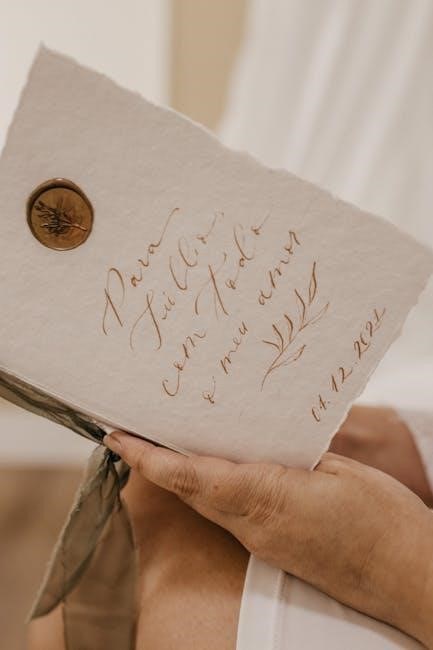
Cursive readers are specialized components within advanced handwriting OCR software, designed to tackle the unique challenges posed by connected handwriting. Unlike software optimized for printed text, these readers are trained on vast datasets of cursive samples, enabling them to decipher letter shapes and connections with greater accuracy. Their core capability lies in segmenting connected strokes into individual characters and then recognizing those characters despite stylistic variations.
Modern cursive readers can handle a wide range of cursive styles, from flowing scripts to more angular forms. They often incorporate features like contextual analysis – using surrounding words to improve recognition – and self-learning algorithms that adapt to individual handwriting patterns. This results in significantly improved conversion rates when processing handwriting PDFs containing predominantly cursive text, facilitating the digitization of handwritten notes and historical documents.
PDF to Word/Excel Conversion with Handwriting Recognition
Converting handwriting PDFs to editable formats like Word or Excel requires sophisticated software leveraging advanced handwriting OCR. This process isn’t a simple image-to-text conversion; it involves recognizing handwritten characters, understanding their context, and reconstructing the document’s original layout. The software aims to preserve formatting – tables, lists, and paragraphs – during the conversion.
Successful conversion relies heavily on the accuracy of the cursive reader and the OCR engine. Excel conversion adds another layer of complexity, demanding the software to identify and accurately populate cells within tables extracted from the handwriting PDF. AI-powered tools are increasingly employed to enhance this process, improving accuracy and reducing the need for manual correction, ultimately enabling seamless data extraction and manipulation.

Applications of Handwriting PDF Conversion
Handwriting PDF conversion unlocks data from handwritten forms, digitizes historical records, and transforms personal notes into searchable digital text for enhanced accessibility.
Extracting Data from Handwritten Forms
Handwriting PDF conversion significantly streamlines data extraction from handwritten forms, a traditionally manual and error-prone process. Advanced Optical Character Recognition (OCR) technology, coupled with AI-powered cursive readers, accurately identifies and converts handwritten fields into structured, digital data.
This capability is invaluable across numerous sectors, including healthcare (patient records), finance (loan applications), and legal services (claim forms). Automated extraction minimizes human intervention, reducing processing times and costs while improving data accuracy. Furthermore, the technology can handle variations in handwriting styles, enhancing reliability. The resulting digital data can then be seamlessly integrated into databases and workflows, facilitating efficient analysis and reporting.
Digitizing Historical Documents
Handwriting PDF technology plays a crucial role in preserving and making accessible historical documents. Converting handwritten manuscripts, letters, and records into searchable digital formats ensures their longevity and facilitates research. Utilizing advanced OCR and, increasingly, multimodal Large Language Models (LLMs), even faded or complex historical handwriting can be deciphered with increasing accuracy.
This digitization process unlocks valuable insights for historians, genealogists, and researchers. Digital archives become more widely available, breaking down geographical barriers to knowledge. Furthermore, AI-powered tools can assist in recognizing variations in historical handwriting styles, improving the overall quality and usability of digitized collections. This preserves cultural heritage for future generations.
Converting Handwritten Notes to Digital Text
Handwriting PDF conversion offers a seamless way to transform handwritten notes into editable digital text. Students, professionals, and anyone who prefers handwriting can benefit from this technology, eliminating the need for manual retyping. Advanced handwriting OCR software and cursive readers accurately interpret handwritten content within PDF files, converting it into formats like Word or Excel.
This process enhances productivity and organization, allowing for easy searching, editing, and sharing of notes. AI-powered tools can even extract tables and mathematical equations from handwritten documents. The ability to digitize notes facilitates cloud storage and access across multiple devices, ensuring information is always readily available.
Future Trends in Handwriting PDF Technology
AI and LLMs will revolutionize recognition, improving adaptability to handwriting styles and enabling accurate extraction of complex data like tables and math.
Multimodal Large Language Models (LLMs) for Recognition
Multimodal LLMs represent a significant leap forward in handwriting PDF technology, moving beyond traditional OCR limitations. These models process handwriting not just as images, but also consider contextual information and linguistic structures.
By integrating visual data with language understanding, LLMs achieve higher accuracy, particularly with historical documents and varied handwriting styles. They can decipher ambiguous characters by leveraging the surrounding text and recognizing patterns within the writing itself.
Recent research, such as the paper “Handwriting Recognition in Historical Documents with Multimodal LLM,” demonstrates the potential of this approach. LLMs are poised to dramatically improve the reliability and efficiency of handwriting PDF conversion, unlocking valuable information from previously inaccessible sources.
AI-Powered Table and Math Extraction
A crucial advancement in handwriting PDF technology is AI-powered table and math extraction. Traditional OCR struggles with the complex layouts and symbols found in handwritten tables and mathematical equations, often resulting in errors or incomplete conversions.
Modern AI algorithms, however, are specifically trained to identify these structures. They can recognize table boundaries, cell contents, and mathematical operators, even in messy or unconventional handwriting. This capability is vital for extracting structured data from handwritten forms, scientific papers, and technical documents.
Advanced handwriting OCR software now incorporates these features, enabling accurate digitization of complex information previously locked within handwritten PDFs.
Improvements in Handwriting Style Adaptability

A significant challenge in handwriting PDF conversion lies in the vast diversity of handwriting styles. Early OCR systems were rigid, performing poorly when faced with cursive, print, or unique personal variations. Improvements in handwriting style adaptability are now revolutionizing this field.
Modern systems utilize deep learning models trained on massive datasets encompassing diverse handwriting samples. This allows them to learn and generalize across different styles, improving recognition accuracy for a wider range of users. AI can now better distinguish between similar-looking characters and interpret unconventional letter formations.
This adaptability is crucial for handling historical documents and personal notes, ensuring more reliable and comprehensive digitization.